Every embroidery business owner knows the frustration of thread breaks, poor tension, or designs that don’t quite stitch as they should. It’s easy to assume the machine is to blame — especially when you’re up against tight deadlines and expensive garments.
But as this recent real-world case showed, the real culprit often isn’t mechanical at all.
One of our customers recently contacted us, convinced their SWF embroidery machine needed yet another repair. They were experiencing thread breakage, irregular noise, and distorted stitching across multiple heads.
To their credit, they’d tried everything they could think of — cleaning, oiling, and adjusting settings — but the issue kept returning. So, our technician visited their workshop to investigate firsthand.
After running a few sample designs, it became clear that the machine itself was performing to factory specification. The problem lay in the materials being fed into it.
The operator had purchased a large quantity of low-cost embroidery backing and pre-wound bobbins from a third-party supplier. On the surface, these looked fine. In practice, they were causing multiple failures:
The backing was too soft and inconsistent, failing to stabilise the fabric during stitching.
The right backing can make all the difference. Not only choosing the type and thickness for the application, but also the consistency in the quality of the material.
The bobbins were poorly wound, over-spinning inside the case and throwing off tension control.
And tension control is vital to a tightly embroidered design.
Combined, these caused looping, gaps, and thread breaks. All the classic signs of a “machine issue” that wasn’t a machine issue at all.
Our technician replaced the backing and bobbins with suitable products that met the manufacturer’s specification, re-framed the garment so it was taut (not stretched), and ran a test embroidery.
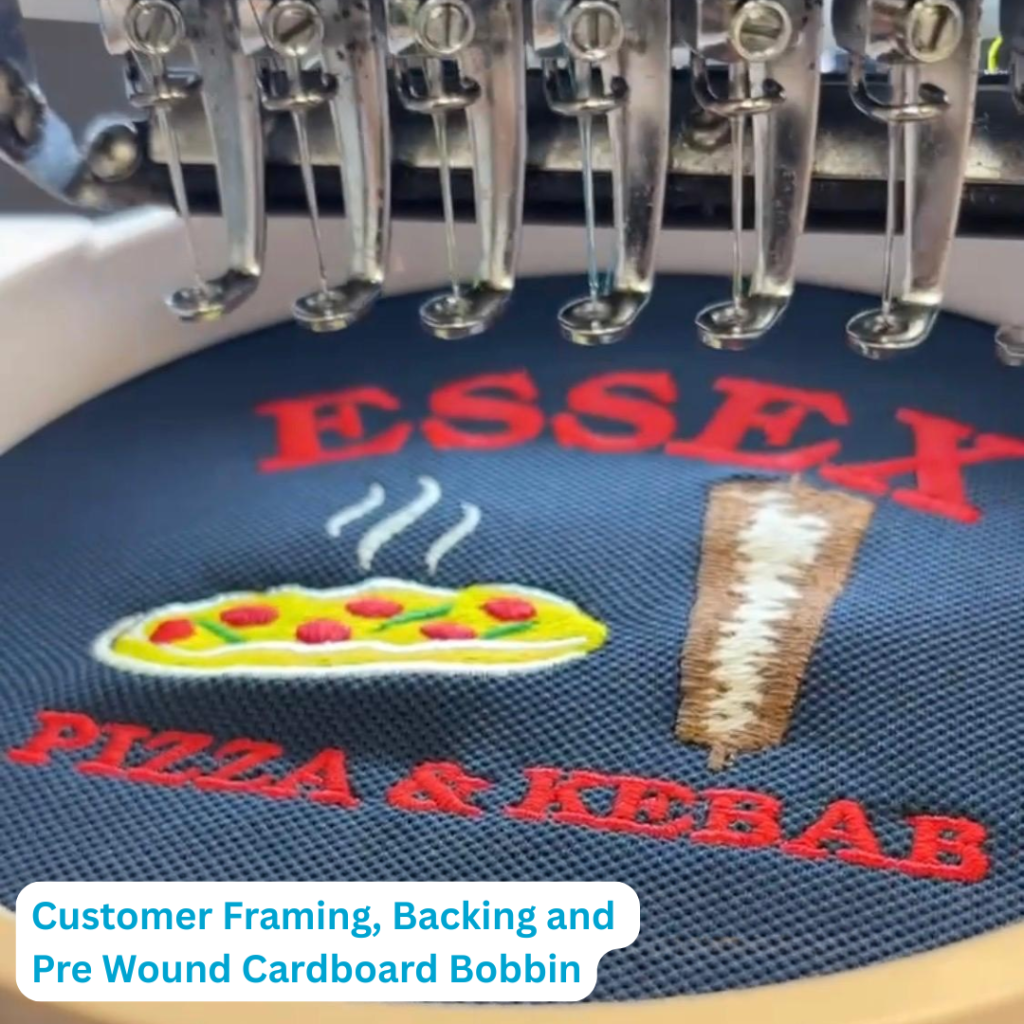
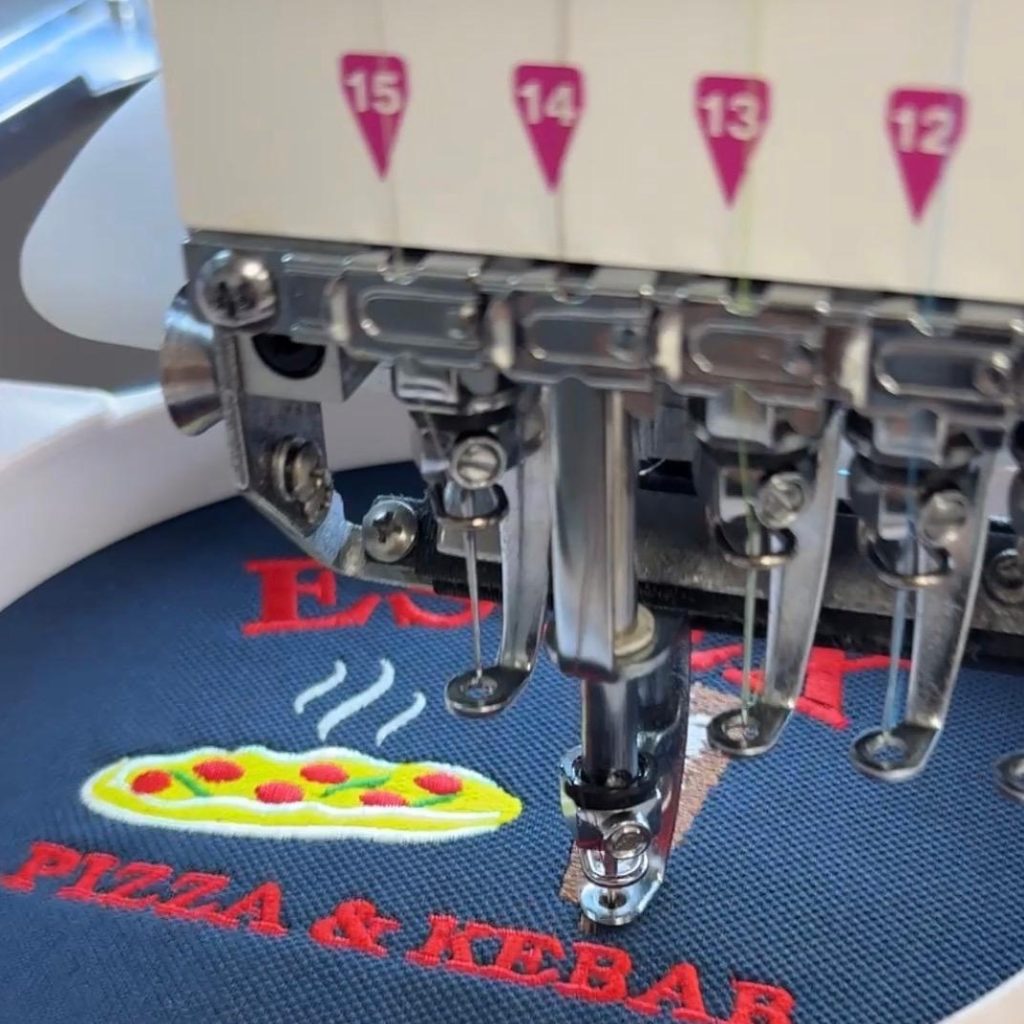
The difference was immediate and obvious. Heads 1 and 6, stitched with the new materials, produced clean, perfectly aligned embroidery. The other heads, still using the original consumables, showed visible distortion.
Embroidery quality depends on both what you use and how you use it. Even the best-built machine can only work with the materials and setup it’s given. Here are some of the most common reasons embroidery jobs fail — and how to prevent them:
1. Poor Backing Selection
Using the wrong weight or structure of backing leads to fabric movement and gaps in stitching. Always match the stabiliser to the fabric type and stitch density.
2. Incorrect Hooping or Framing
Loose or uneven hooping allows fabric to shift during operation. The garment should be taut, flat, and evenly tensioned — never stretched. A loose hoop will almost always cause registration issues.
3. Improper Thread Tension
Incorrect tension causes looping, breaks, and inconsistent stitch formation. Check both upper and bobbin tension regularly and clean thread paths to prevent buildup.
4. Damaged or Worn Needles
Needles should be replaced routinely — typically every 8–10 hours of run time. Dull or bent needles can cut thread, snag fabric, and distort designs.
5. Low-Quality Bobbins or Threads
Uneven winding or cheap fibres can undo even the best tension setup. Use consistent, manufacturer-approved bobbins and thread for reliable results.
6. Operator Error and Design Setup
Sometimes the issue lies in how the design is digitised or how it’s positioned on the garment. Proper training helps operators recognise and correct these subtle factors.
When all these fundamentals are aligned, your machine can do what it was designed to do — produce beautiful, repeatable embroidery with minimal downtime.
At YES Group, we don’t just install machines and leave you to it.
Every SWF embroidery machine we supply includes technical setup, operator training, and access to ongoing support.
Our recent training sessions, held both in person and online, cover exactly these kinds of troubleshooting tips — helping customers avoid costly downtime and wasted garments.
And with our SWF 7-Year Stitch Guarantee, you can rest assured your investment is protected.
When used with proper materials and maintained correctly, your machine is covered for years of reliable, high-quality performance.
This experience reinforced what many professionals already know: when embroidery quality slips, start by checking your foundations — backing, bobbins, thread, needles, hooping, and framing — before you blame the machine.
SWF machines are built to run day in, day out. And when paired with the right materials and proper training, they do exactly that.
If you’re experiencing issues with tension, thread breaks, or inconsistent stitching, our support team is here to help. From diagnostics and service to training and materials advice, we’re committed to keeping your machine, and your business, running beautifully.