

With St Patrick’s Day putting Irish brands and Irish identity in the spotlight, it feels like the right time to look at one of the most recognisable names in teamwear: O’Neills.
Founded in 1918, O’Neills has grown from a Dublin family business into a major force in sportswear, teamwear, and club identity. What makes the brand so compelling is not just its history, but the way that history still connects to modern production. It is a business built on sport, on manufacturing, and on the discipline it takes to deliver at scale.
For YES Group, that story matters for another reason too. O’Neills is one of our biggest embroidery clients, running around 75 SWF embroidery machines supplied by YES. While the company also prints in-house, this article focuses on the embroidery side of the operation and why it remains such an important part of delivering teamwear at scale.
O’Neills is not simply a sportswear label with Irish branding around the edges. Its roots are embedded in Irish sport itself. The brand began with footballs and sliotars before expanding into sports apparel and playing kits, giving it a long and credible connection to the teams, communities, and traditions that helped shape it.
That heritage still matters today. In a market full of short-lived trends and fast-moving product cycles, a brand with more than a century behind it brings a different kind of authority. There is a sense of continuity in O’Neills that feels especially relevant around St Patrick’s Day. It is proudly Irish, but it is also practical, hardworking, and deeply tied to performance rather than nostalgia alone.

What sets O’Neills apart is the way it has translated heritage into modern scale. It remains 100% Irish-owned, supplies teamwear to thousands of clubs worldwide, and operates with the kind of production depth that serious teamwear demands.
That is where the brand story becomes especially interesting. This is not a business relying on image alone. It is a manufacturing-led sportswear operation with in-house control across key stages of production. That matters because clubwear, training wear, and personalised products all depend on repeatability, speed, and consistency. When a brand serves teams at this level, quality has to hold up across volume as well as appearance
In teamwear, scale is only valuable if it is backed by control. O’Neills has built a vertically integrated setup that covers knitting, dyeing, cutting, sewing, printing, and embroidery in-house. That kind of production structure creates stronger control over quality, better consistency from garment to garment, and more confidence when deadlines matter.
For clubs, schools, counties, and organisations, that production depth translates into something simple: reliability. Orders need to look right, fit right, and arrive when expected. The more of that process a brand can control internally, the stronger the end result tends to be.
That is one reason O’Neills has such a strong reputation in custom teamwear. The brand is not only supplying garments. It is managing a production environment capable of delivering professional results across a wide range of sports and customer types
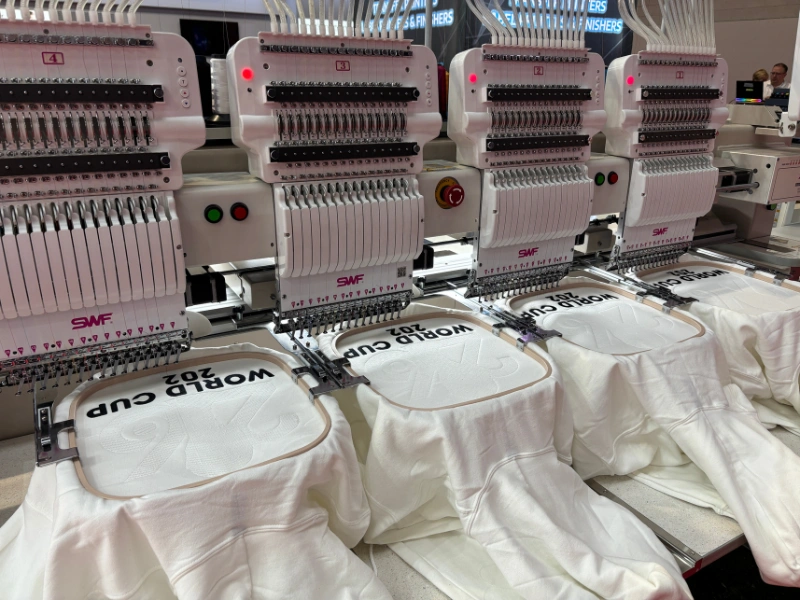
Embroidery might not always be the first thing people think of when they picture teamwear, but it plays a major role in how premium sportswear is presented. Crests, initials, sponsor details, staff clothing, presentation garments, and selected off-field products all rely on embroidery that looks sharp, runs consistently, and holds up under heavy wear.
At O’Neills scale, that requirement is not small. Running around 75 SWF embroidery machines supplied by YES Group speaks to the level of capacity needed behind the scenes. It also reflects the importance of equipment that can cope with long production days, repeat work, and demanding standards.
For YES, this is where the relationship becomes especially meaningful. Supporting a client of this size is not only about supplying machines. It is about helping maintain a production environment where output, uptime, and stitch consistency all matter, every day.
A business producing teamwear at this level doesn’t need embroidery equipment that only performs well in ideal conditions. It needs machinery that can deliver again and again – across changing workloads, garment types, and production pressures.
That is why multi-head production is so important. For larger embroidery environments, the right setup supports higher throughput, more consistent repetition, and a more efficient route from order intake to finished garment. Features like strong stitch quality, dependable running, operator familiarity, and practical support all matter when embroidery becomes part of a bigger manufacturing rhythm.
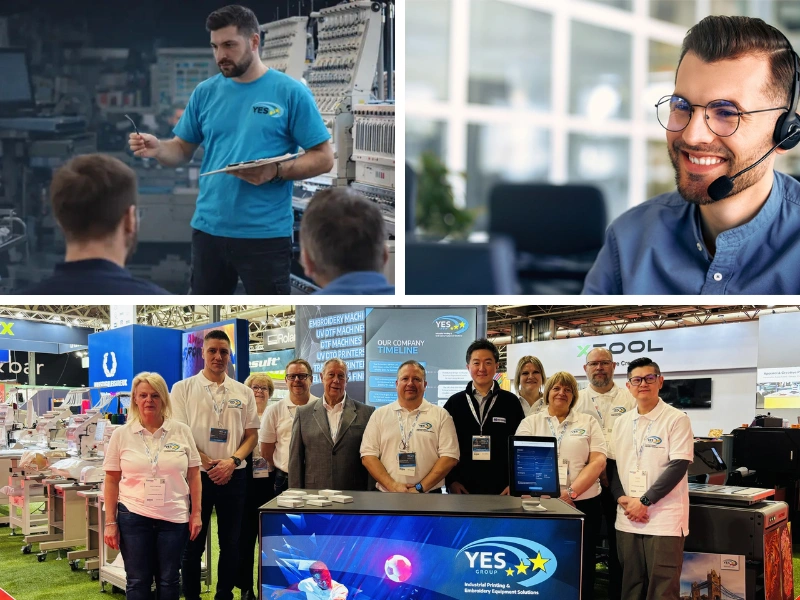
This is also where YES adds value beyond the machine itself. Installation, training, technical guidance, and long-term support help turn equipment into a dependable part of the workflow rather than a weak point in it.

Of course, large-scale embroidery does not run on machinery alone. It also depends on the day-to-day products that keep production stable and consistent, from threads and backing to needles, frames, accessories, and replacement parts.
For businesses operating at serious volume, those details make a real difference. The wrong backing can affect stitch quality. The wrong needle can lead to unnecessary wear or inconsistent results. Even small consumable decisions can have a knock-on effect when multiplied across a busy production floor.
That is why the YES Store matters as part of the wider embroidery picture. Access to embroidery supplies that support professional output helps businesses protect quality between service visits and keep the workflow moving when production is under pressure.
O’Neills stands out because it brings together heritage, production control, and commercial scale in one recognisable brand. From its beginnings in Dublin to its position as Ireland’s largest sportswear manufacturer, it shows what can happen when a company continues to invest in both identity and infrastructure.
For YES Group, the connection is a proud one. Supporting one of our biggest embroidery clients with around 75 SWF machines is a strong example of how the right embroidery setup can support serious production behind a major brand.
And for any business looking at growth in teamwear, workwear, or branded garments, it is a useful reminder that embroidery success depends on more than decoration alone. It depends on machines, support, supplies, and systems that can keep delivering when the workload gets real.