
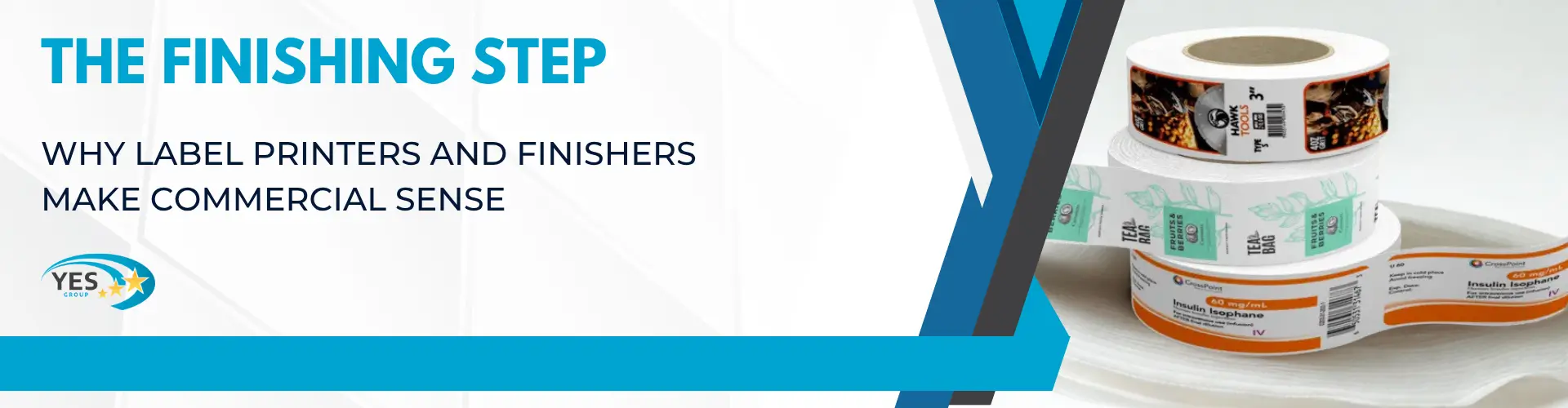
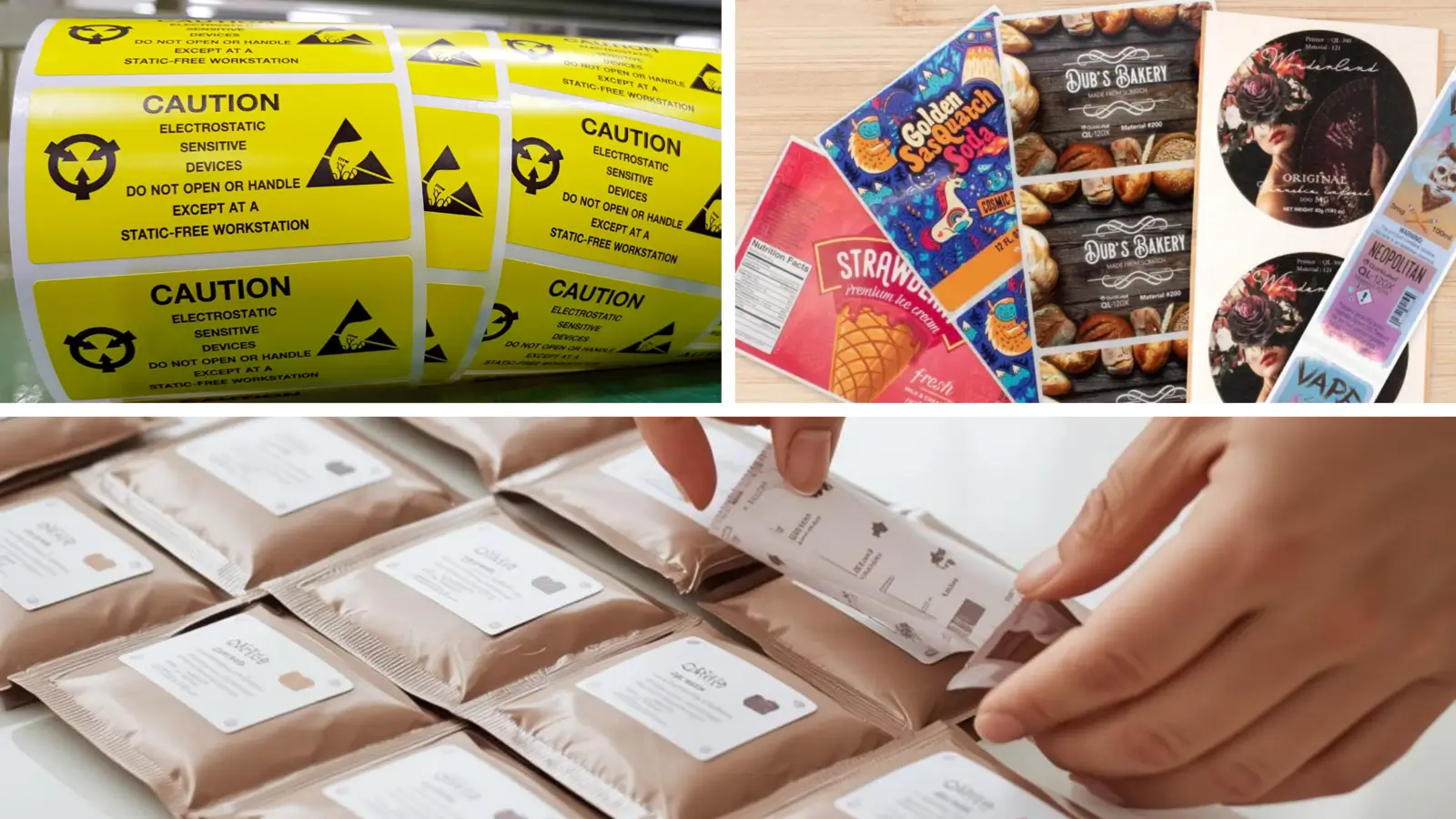
Label printers and finishers are becoming far more relevant to growing print businesses than many people first realise. At a glance, they can look like specialist packaging equipment for a completely separate industry. In practice, however, they often solve a problem that many garment decorators, UV printers, personalised product businesses and mixed production shops eventually run into: the need to move from producing a decorated item to delivering a complete, retail-ready order.
That is why label printers and finishers now make sense for far more than dedicated label producers. They can help a business print branded labels on demand, cut and finish them professionally, and keep more of that workflow in house. For a company already producing transfers, decorated products, decals or embroidered goods, that can mean tighter control over presentation, faster turnaround, and a more polished result for the customer.
A label printer is designed to print onto self-adhesive label stock, usually from a roll, so the business can produce labels when they are needed rather than ordering large quantities in advance. Depending on the setup, those labels might carry product names, branding, ingredients, barcodes, QR codes, pricing, care information, batch data, warning information or promotional graphics. In other words, the label printer handles the print stage of the process.
This matters because label work often changes more frequently than people expect. Artwork gets updated. Product lines expand. Seasonal versions come and go. One order might need twenty labels, while the next might need two thousand. An on-demand label printer gives a business far more flexibility because it can print the required quantity at the right moment instead of forcing the business to over order pre-printed stock and hope nothing changes in the meantime.
Some label printers are aimed at vibrant, short run colour work and everyday product branding. That is where compact models such as the Eclipse EQL-120Xe fit well. They are built for brands and production teams that want strong colour, sharp detail and the freedom to print different jobs as needed. That can be especially useful when a business is testing new ranges, handling frequent artwork changes or working across lots of small batches.
Other label printers are more focused on durability or compliance-led output. That is where machines such as the EQL-120D become more relevant. If labels need to stand up better to moisture, abrasion, UV exposure or more demanding handling conditions, print technology matters just as much as design. So, even at the print stage alone, the choice of label printer starts to shape what the finished workflow can realistically support.
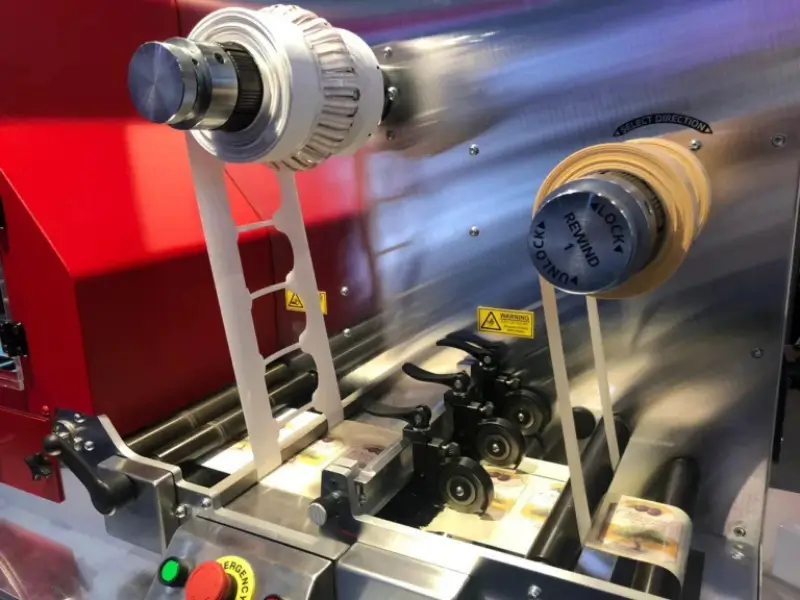
Printing the artwork is only part of the job. In many cases, the printed roll still needs to be converted into something neat, durable and ready to apply. That is where a finishing machine comes in. A digital label finisher takes the printed roll and carries out the next stages of production, which can include lamination, contour cutting to shape, waste matrix removal, slitting and rewinding onto tidy finished reels.
Each of those stages has a practical purpose. Lamination can add protection and improve the feel of the label. Contour cutting gives the label its final shape. Matrix removal strips away the unwanted waste around the labels. Slitting can divide a wider roll into narrower finished rolls. Rewinding then presents the labels neatly, ready for application, storage or dispatch. Without finishing, a printed roll may still be useful in some situations, but it often will not look or handle like a clean, professional finished label product.
This is also why a finishing machine should not be treated as a minor add-on. It has a direct effect on how polished the final label looks, how efficiently jobs move through production and how practical the reels are once they leave the machine. Systems such as the Eclipse Mini+ are built to bring that finishing stage in house for shorter runs and faster changeovers, while higher-output routes such as the LF220HS are aimed at businesses that need a more substantial finishing workflow.
A label printer and a finishing machine can absolutely be used separately. For example, a business might already own a label printer and simply want to improve the post-print stage, or it may already print labels elsewhere and want to bring finishing in house first. That is a perfectly valid route.
However, the reason the two are so often discussed together is simple: they create a fuller workflow. The printer produces the label roll. The finisher turns that printed roll into a more complete, ready-to-use product. When both stages are aligned, the business gains more control over timing, consistency and presentation. It also reduces the gap between design, print and dispatch, which is often where delays, outsourcing costs or manual bottlenecks begin to build.
This is where connected solutions start to make commercial sense. A compact print-and-finish route built around the Eclipse Mini+ packages, for example, can suit businesses that want short-run flexibility and frequent artwork changes. Meanwhile, a more production-led route using the Eclipse LF220HS packages can make sense for businesses that want a smoother, more repeatable workflow for daily label output. The key point is not that the equipment must always be sold together. It is that the workflow becomes stronger when the print and finish stages are planned to work well alongside each other.
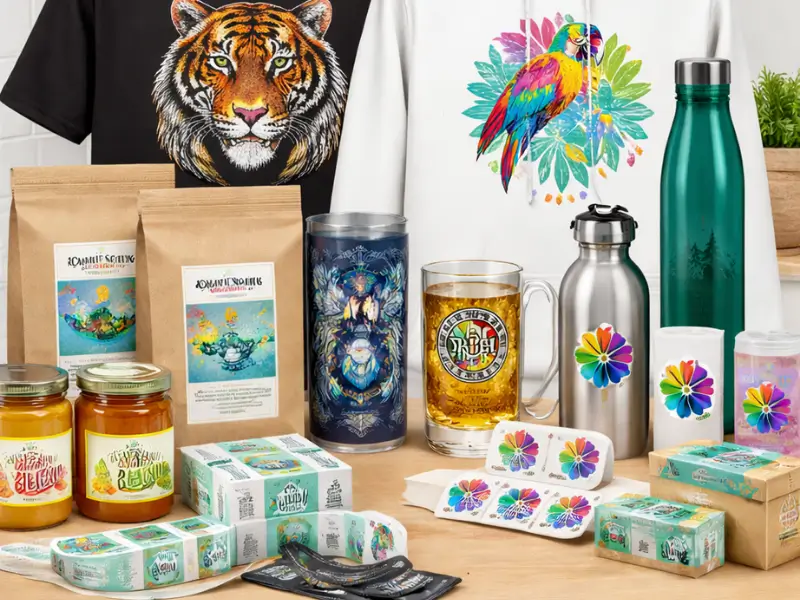
For DTF printers and garment decorators, the fit is often stronger than it first appears. A DTF business may already be producing excellent apparel graphics, but the surrounding presentation can still be basic. Label printers and finishers can help create branded packaging labels, order labels, size stickers, barcode labels, dispatch labels and promotional seals that make the finished order look premium. They do not replace garment decoration. Instead, they help frame it more professionally.
For UV and UV-DTF printers, the connection is equally practical. UV printing and UV-DTF are already used for product branding, decals, personalised hard goods and packaging-related applications. A label workflow adds another capability around that. It allows the same business to produce proper roll labels for boxes, jars, bottles, sleeves, packs and product lines, while UV or UV-DTF handles the decorated item, the decal or the premium finish elsewhere in the order. As a result, the business can cover more of the full branded presentation instead of only one part of it.
For embroidery businesses, the opportunity sits around presentation, organisation and repeatability. Embroidery customers often work across workwear, uniforms, clubs, promotional items and retail garments. In those environments, labels can support bagging, kit sorting, brand presentation, reorder systems, packaging and dispatch. That does not mean replacing woven labels or stitched branding. Instead, it means adding a clean self-adhesive labelling workflow around the embroidered product so the finished order looks better organised and easier to handle.
For mixed print businesses, the value can be even broader. A company may already produce DTF transfers, UV printed items, UV-DTF branding and embroidery in the same week. In that setting, a label printer and finisher can become a shared support system across several revenue streams. It helps the business serve more of the order in-house, keep branding more consistent and reduce the number of small but time-consuming tasks that sit outside the main production equipment.
First, you gain flexibility. On-demand printing makes it easier to run short batches, trial new products, update details quickly and respond to smaller orders without the waste that often comes with pre-printed stock. That is especially useful for businesses that deal with frequent SKU changes, seasonal versions, personalised ranges or customer-specific artwork.
Secondly, you gain a stronger presentation. Labels influence how professional an order looks once it is packed, shelved or handed to the end customer. Even when the core product is excellent, weak packaging or inconsistent labelling can make the overall brand feel less considered. By contrast, a well-finished label can help the full order feel more polished, more intentional and more ready for resale or distribution.
Thirdly, you gain more control over production timing. When print and finishing are handled in house, the business is less exposed to outside lead times for small label runs, design amendments or repeat jobs. That does not automatically mean every job becomes faster. It does, however, give the business more influence over its own schedule, which is often just as valuable when deadlines tighten.
Finally, you gain a platform for growth. Once a business can print and finish labels properly, it can support more packaging styles, more branded extras, more product variants and, in some cases, entirely new types of order. That makes the investment easier to view as part of the wider workflow, not just as another machine sitting beside the main production line.
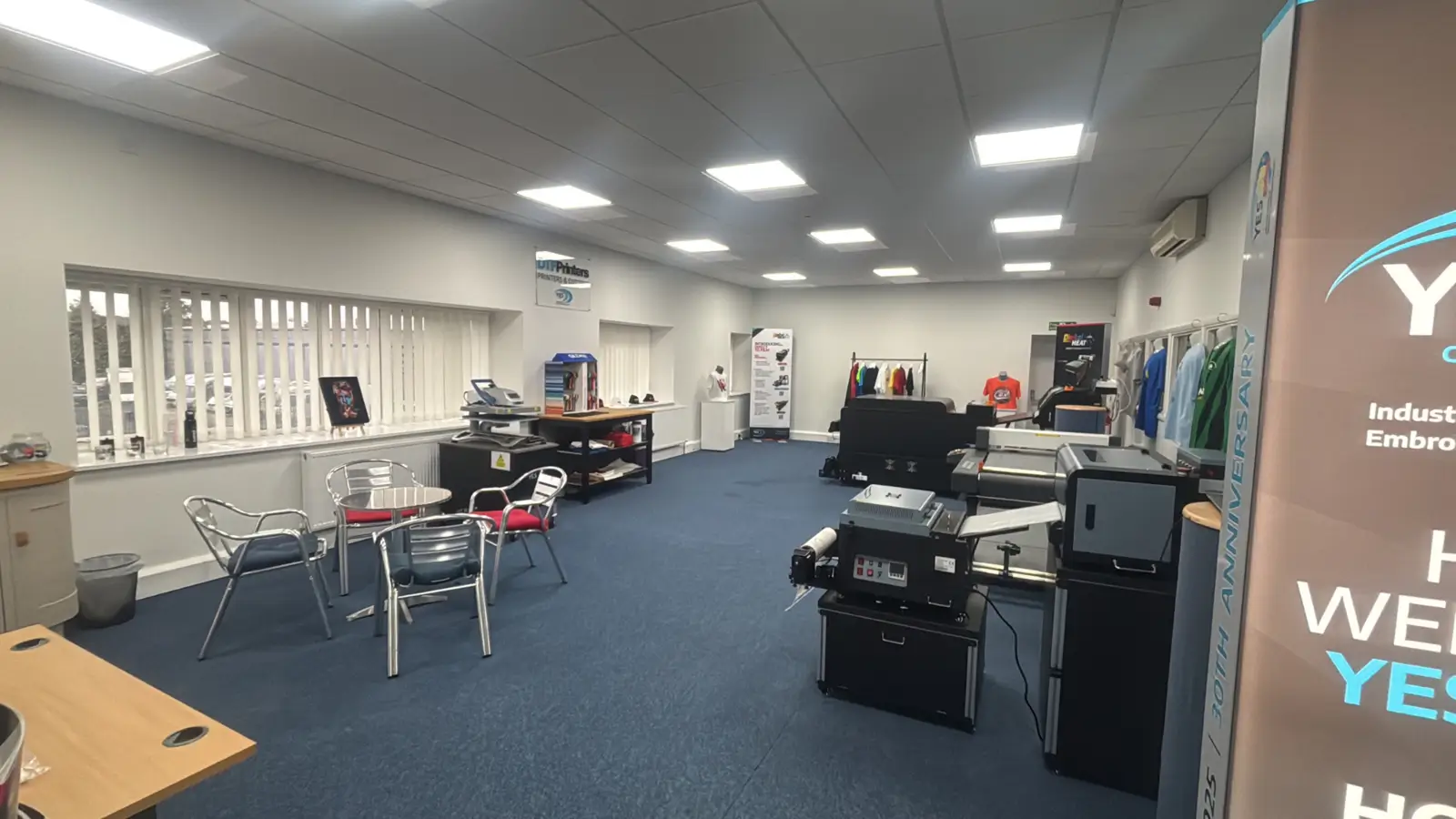
The right setup is not the same for every customer, and that is where YES can help. Some businesses only need a printer. Some already print and need a better finishing route. Others want a more joined-up print-and-finish workflow from the start. The best answer depends on the type of labels required, the materials involved, the expected volume, the level of durability needed and how the new workflow will sit alongside the rest of the business.
That is why the conversation should start with the work you are already doing. If you mainly need short run colour labels and fast artwork changes, a compact route may make more sense. If more daily throughput, wider labels or a more connected finishing workflow is needed, the recommendation may shift. Likewise, if durable or compliance-led labels are part of the brief, the printer choice needs to reflect that from the beginning rather than being treated as an afterthought.
YES helps by looking at the workflow as a whole. That includes matching the print stage to the finishing stage, discussing where media handling matters, advising on the sort of jobs you actually run and helping you choose a setup that supports growth rather than creating another bottleneck. Just as importantly, YES backs that up with installation, training, practical guidance and UK-based support, so the equipment is not simply delivered and left to figure itself out.
For existing businesses, that wider view matters. The aim is not to bolt on a machine for the sake of it. The aim is to create a label workflow that genuinely supports the orders already coming through the door, improves presentation and opens up sensible next steps.
If that is the stage your business is reaching, speak to YES about the kind of labels you need to produce, the products you already decorate, and the workflow that makes most sense for your business. Whether you need a printer, a finisher, or a more complete print-and-finish route, the team can help you choose a setup that fits your production goals.
Call us today on 01623 863343 or email the team at sales@yesltd.co.uk