
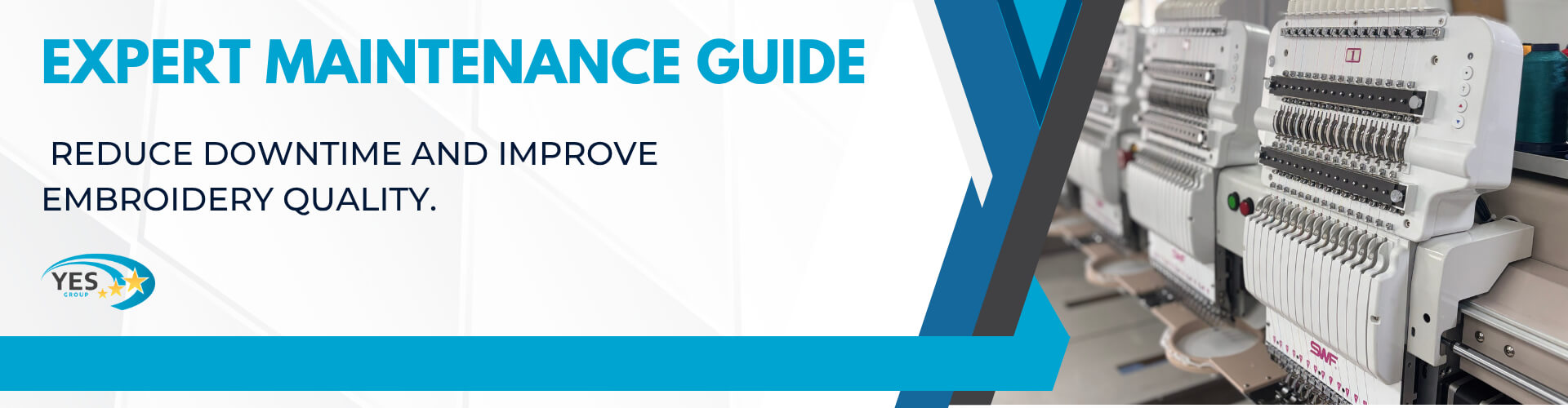
How to Maintain an Industrial Embroidery Machine
Industrial embroidery machines are built to work hard, day after day. However, one of the most common questions I’m asked is:
“Why do we need to maintain our embroidery machine?”
It’s a fair question, especially when many users either don’t have the time or simply don’t enjoy carrying out routine maintenance.
The simple answer is this: regular maintenance improves productivity.
When you follow a prescribed maintenance schedule, your embroidery machine performs better, runs more reliably, and becomes easier to operate. In return, you’ll experience fewer breakdowns, more consistent embroidery quality, and less downtime.
Let’s start with some simple maintenance tasks that are easy to carry out.
Cleaning Your Embroidery Machine
Clean the Sewing Hook and Bobbin Area
One of the most important areas to keep clean is around the sewing hook and bobbin case.
- Use either:
- A compressed air blower
- A clean, dry, soft paintbrush
Remove the bobbin case from the machine and take out the bobbin. Clean inside the bobbin case carefully, ensuring that if you accidentally dislodge the NBL (No Back Lash) spring, you clip it back into position. This small component plays an important role in maintaining smooth and consistent thread tension.
Next, clean around the sewing hook area.
Monthly Deep Cleaning
If possible, once a month remove the needle plate and clean the visible area underneath.
You’ll often find lint, thread fragments and dust accumulating around the thread trimming system. Giving this area a thorough clean helps prevent unnecessary wear and potential stitching issues.
Lubricating the Sewing Hook
Now that the area is clean, what should be lubricated?
The sewing hook is one of the most important moving parts on your embroidery machine.
Always use the correct sewing machine oil with the viscosity recommended by the manufacturer. While aerosol spray oils may seem convenient, they’re not ideal because they spread everywhere and attract dust and fabric lint, creating more cleaning work later.
Most embroidery machine manuals recommend:
One drop of oil on the sewing hook raceway twice a day.
Not sure where the raceway is?
Remove the bobbin case and look inside the hook area. Imagine the face of a clock. At approximately the 6 o’clock position you’ll see a small shiny section with a notch cut into it. That’s the area requiring lubrication.
Just one drop of oil is sufficient. Over-oiling can create additional problems.
Understanding the Bobbin Case and NBL Spring
A common question is:
“Do I need to oil the bobbin case?”
Before answering, let’s think about how your bobbins are used.
Most embroidery machine manufacturers provide reusable metal or aluminium bobbins and a bobbin winding system. Inside the bobbin case is the NBL (No Back Lash) spring, which performs a surprisingly important job.
- The NBL spring helps prevent the bobbin from overspinning during:
- Colour changes
- Thread trims
- Design completion stops
This helps eliminate bunching of bobbin thread on the underside of the embroidery.
For this area, a very small amount of aerosol oil can be beneficial. A light spray onto the NBL spring can help keep the mechanism operating smoothly.
A small component, but one that performs a very important function.
General Embroidery Machine Cleaning
Looking After Electronic Components
The electronic systems inside modern embroidery machines can be some of the most expensive parts to replace.
While electronics can fail unexpectedly, there are several simple steps you can take to minimise risk.
- Today's embroidery machines rely on:
- Electronic control systems
- Drive motors
- Touchscreen controllers
- Internal software
Cleaning the Driver Box
Under the machine table you’ll often find what’s commonly referred to as the Driver Box.
This contains many of the systems responsible for embroidery frame movement and communication between the control panel and machine functions.
Most machines include cooling fans and air intake systems. Some also feature fine mesh filters that help prevent lint from entering the enclosure.
Before cleaning:
⚠️ Always switch off the machine and disconnect it from the mains supply.
This prevents cooling fans from drawing loosened lint and dust into the Driver Box during cleaning.
If you’re trained and confident, you can carefully clean the internal area using a vacuum cleaner. However, take care not to knock or damage electronic components.
If you’re unsure, leave internal cleaning to a qualified embroidery machine service technician during your next scheduled service visit.
Check Cooling Fans
- Inspect any cooling fans fitted to:
- Driver boxes
- Control panels
- Electronic housings
Keep these free from lint and dust buildup.
Don’t worry if you can’t see a fan on your control panel—many machines don’t have one fitted.
Embroidery Machine Lubrication Systems
Machines with Automatic Oil Pumps
Many modern embroidery machines, including newer SWF models, feature automatic lubrication systems.
These oil pumps deliver lubrication to areas that would otherwise be difficult for operators to access.
- When using an oil pump:
- Follow the manufacturer's instructions carefully
- Avoid excessive pumping
- Never force the pump handle
If the pump begins to feel resistant, it’s usually because sufficient oil has already been delivered.
- Forcing the handle can result in excessive oil distribution, potentially causing:
- Oil stains on garments
- Oil dripping onto the machine
- Oil contamination on floors
Important Tip
Never allow the oil reservoir to run empty.
If air enters the system, bubbles can become trapped within the oil lines and may take time to work through the lubrication system.
Machines Without Automatic Lubrication
If your machine doesn’t have an automatic oiling system, you’ll need to continue using a manual oil can.
Always use:
✔ Non-staining sewing machine oil
- Most machines include lubrication diagrams either:
- In the operating manual
- On stickers attached to the machine
Follow the manufacturer’s recommended lubrication intervals to ensure optimum performance.
Good Housekeeping Around Your Embroidery Machine
Keeping your machine clean isn’t just about appearance.
A clean embroidery environment helps prevent machine jams, poor embroidery quality and unnecessary service calls.
Keep Thread Ends Tidy
Avoid leaving loose thread ends hanging from thread cones.
These can easily become wrapped around rotating shafts, stripping thread from the cone and potentially causing internal blockages.
Keep the Pantograph Area Clear
Never use the rear of the embroidery table as storage space.
Boxes, thread cartons and other items can obstruct pantograph movement.
- If the pantograph collides with an object during embroidery, you may end up with:
- Displaced embroidery designs
- Production downtime
- Wasted garments
Correct Bobbin Loading
When replacing a bobbin, avoid leaving excessive thread tails.
After threading the bobbin through the bobbin case and pigtail guide, leave approximately:
50–75 mm of thread tail
This provides enough thread for pickup at the start of sewing while reducing the risk of thread becoming tangled behind the sewing hook.
- If bobbin thread becomes wrapped around the rear of the sewing hook, it can eventually force the hook forward, leading to:
- Poor stitch quality
- Thread breaks
- Needle breakages
This is one of the most common causes of avoidable sewing issues.
Final Thoughts
Routine embroidery machine maintenance doesn’t have to be complicated.
A few minutes spent cleaning and lubricating your machine each day can significantly improve reliability, reduce downtime, and help maintain consistent embroidery quality.
Whether you’re running a single-head machine or a large multi-head embroidery operation, regular maintenance is one of the simplest ways to protect your investment and maximise productivity.
If you’re unsure about any aspect of embroidery machine maintenance, servicing, or lubrication, the team at Yes Ltd can help with expert advice, technical support, and embroidery machine servicing throughout the UK.