DTF Printing is the latest, and arguable the BEST way to product high quality t-shirt transfers.
That means 2 things:
#1: If you’re in the custom t-shirt business or produce custom apparel of any kind, dtf printing is going to change your business for the better
#2: If you found this article looking for places to get custom t-shirts printed, or what questions you should ask your provider – you might want to put dtf printing on your requirements list.
DTF stands for “direct to film”.
That film is a transfer film that’s designed to be heat applied to fabric of some kind. Of course, by far the most common application is in making custom T-shirts!
Below you’ll find a description of how it all works. Just keep in mind that almost all of it is automatic.
Here’s a breakdown of the dtf process using the DigitalHeatFX 12H2 as an example:
You will acquire or create an image that was created in a high-resolution format. That could be anything from a photograph to a piece of original digital art, or even a company logo. That image is imported into the Print Optimizer printing software.
To get the printing process started, just hit Print >>
Simply put, the printer automatically feeds a roll of the transfer film through the printer while it jets the colours onto it based on the Graphics you’re printing.
Picture a 24” wide roll of material being fed through the printer at this point.
DTF used a unique kind of polymer glue powder that gets shaken and evenly spread across the film.
The powder sticks to the wet ink. Anything that doesn’t stick is recycled for the next print.
Picture putting powdered sugar on a pastry – it sticks where it should!
The powder glue that has been applied to the wet ink has to be heated to high temperatures to merge with the ink and the film.
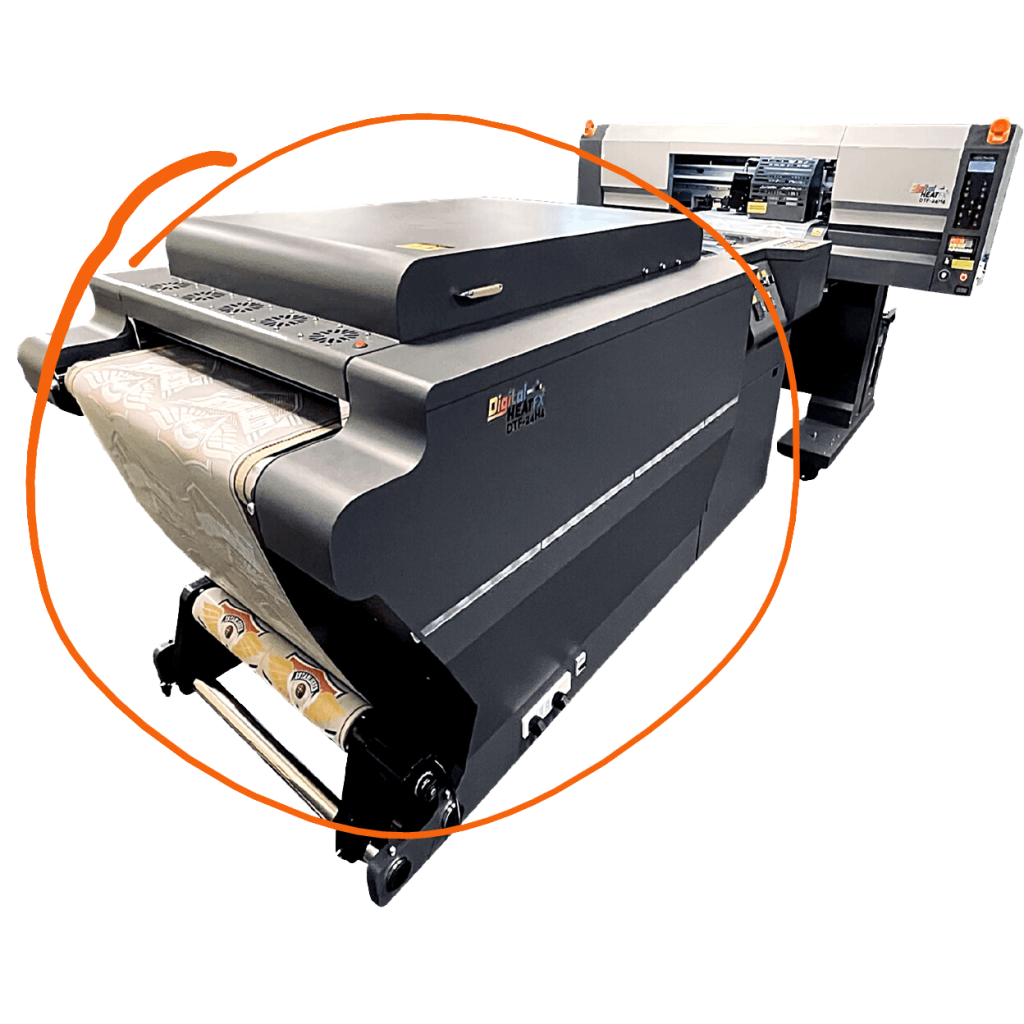
Then, after the powder is applied, that section of the rolled transfer material is pulled through a tunnel dryer for curing. The built-in conveyor moves the material through the “oven” all on its own.
The picture here shows the belt dryer that the film runs through and how it’s collected on another roll when it’s cured. (Machine Pictured DTF24/H4)
In the end, that t-shirt transfer film rolls back onto another roller at the end of the dryer. Once you’re ready, simply unroll and cut your transfers manually or with a digital cutter for heat pressing onto a t-shirt.
Why is DTF taking over the digital t-shirt printing industry?
That’s easy.. it produces a better end result of the consumer. Soft feel, great washability and applies to almost ANY fabric type. And for the custom t-shirt or apparel business, it does that reliably, with a minimum of operators and very profitably.
Here’s a great example of how a DTF transfer can even help replace or augment an embroidery machine for hats or caps. Proving the versatility and profitability of this new technology:
There is a myriad of ways to print a custom t-shirt. And those different methods each having some pros and cons. Here are the top few option to DTF and how they compare.
Also called silk screening, this is one of the oldest custom t-shirt printing technologies and has a lot of advantages.
It has incredible washability, if done correctly. If you have a t-shirt from school or a concert that you’ve been wearing for decades, it’s most certainly been screen printed.
So it makes sense that there are only a few drawbacks to ordering screen printed tees. OR starting a screen-printing shop:
DTF is a digital, inkjet printing process. It uses specialty software (that’s included with it) that takes Cyan, Magenta, Yellow, Black AND White ink to create full color images. It’s basically similar to printing a photo off your computer, so NO LIMIT on colours.
And since there’s little set up involved there’s usually no minimum orders if you are dealing with a shop with a dtf printer.
DTG is a great way to print great quality full color images directly onto a shirt.
The direct to garment printing process is MUCH more like using a home colour inkjet printer, at least in general terms. [DTG Printers are much more high quality, commercial machines].
So, simply put, you load a blank t-shirt onto a tray like you might load a blank page into your home printer.
Then when you send your graphic file from your computer, the t-shirt is pulled into the machine, printed on, then ejected back out.
The ink is still wet when it comes out, so you’ll need to use a commercial heat press or tunnel dryer to “cure” the image, which is applying pressure and heat to make sure the image is embedded into the shirt.
DTG really shines, producing low volumes of very high quality prints and does a particularly good job on fades and smoke effects.
Compared to DTF printing DTG doesn’t wash quite as well, though you wouldn’t be able to tell if you didn’t have both and compare over time.
There’s a lot that goes into starting and growing a business. And choosing the RIGHT technology to sit at the heart of it is vitally important.
YES is in a unique position to help because we not only have vast experience in all manner of customization technology. We both have a variety of options in house so we’re not trying to sell you this ONE thing.
And, as a fellow small business growth success story, we have the business experience to sit next to you and help you choose.